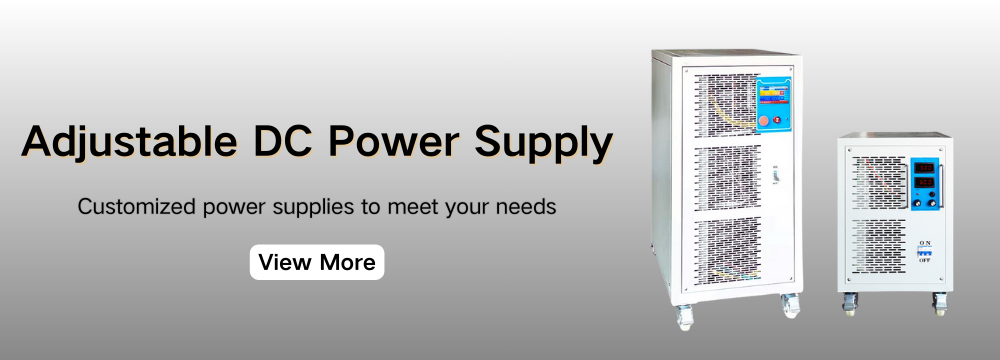
In industrial control, precision electronics and other special power supply scenarios, pulse power supplies are core components for efficient voltage conversion and stable output. Although both pulse step-down and pulse step-up power supplies belong to the pulse power supply system, they differ significantly in working logic, load adaptation and application scenarios. Improper selection will directly affect equipment stability and service life. This article clearly distinguishes the differences between them from three aspects: core characteristics, application scenarios and selection points, helping relevant personnel accurately match needs.
1. Differences in Core Working Logic and Electrical Characteristics
Based on Buck topology, pulse step-down power supply forms a pulse sequence by quickly turning on and off switching devices, stores and filters energy with inductors and capacitors, and stably reduces higher input voltage to lower output voltage. The output is always lower than the input, suitable for low-voltage, high-current and low-ripple requirements. The core advantage of pulse power supply in the step-down link is stable output and fast dynamic response, adapting to loads sensitive to voltage fluctuations.
Pulse step-up power supply adopts Boost topology. When the switch is on, the inductor stores energy; when it is off, the inductor releases energy superimposed on the input voltage to realize output voltage higher than the input. Its core is to raise the voltage level to meet high-voltage, low-current or transient high-voltage requirements. Pulse power supply focuses more on voltage resistance and transient power output in the step-up link, adapting to short-time high-voltage excitation scenarios.
2. Typical Application Scenarios and Load Adaptation
Pulse step-down power supplies are mostly used in low-voltage stable power supply scenarios, such as industrial control modules, sensors, automotive low-voltage circuits, precision instruments and portable devices. Such loads have high requirements for voltage purity and ripple control. Pulse step-down power supply can maintain constant output within a wide input range, reduce the voltage withstand pressure of back-end devices, reduce energy consumption and extend the battery life of battery-powered equipment, making it the preferred choice for low-voltage precision power supply.
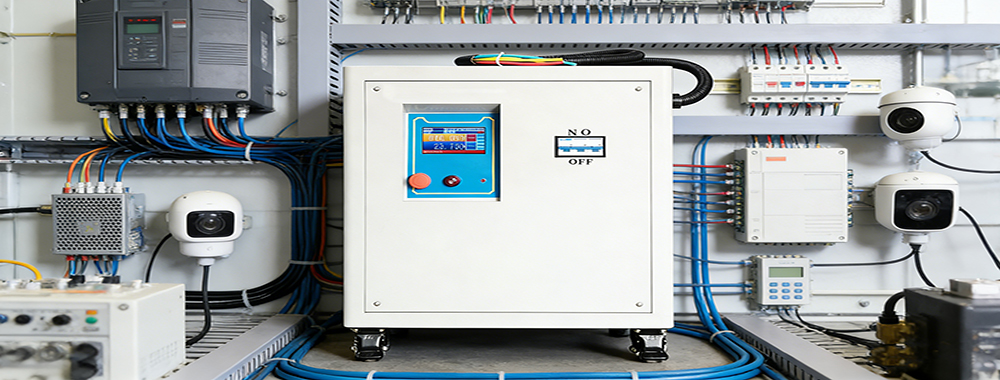
Pulse step-up power supplies are mostly used in high-voltage driving scenarios, such as electrostatic precipitation, plasma generation, ozone preparation, photoelectric driving and high-voltage testing equipment. Such loads require short-term or continuous high-voltage excitation. Pulse step-up power supply outputs high voltage in the form of pulses, which not only meets the working needs, but also reduces the safety and loss risks caused by continuous high voltage, and is the core component of high-voltage excitation units.
3. Selection Points and Summary
When selecting a pulse step-down power supply, it is necessary to focus on output voltage regulation accuracy, ripple suppression and conversion efficiency, and pay attention to heat dissipation and EMC design; when selecting a pulse step-up power supply, it is necessary to check the output high-voltage range, pulse peak power and voltage insulation performance, and strengthen the protection mechanism. In some scenarios, the adaptability of pulse power supply can be improved through a buck-boost combination scheme. YIBENYUAN has stable parameter control capabilities in the design of step-down and step-up modules of pulse power supplies, which can meet customized needs in various fields.
The essential difference between the two lies in the direction of voltage conversion and usage goals: pulse step-down power supply focuses on step-down, current stabilization and low ripple to serve low-voltage precision power supply; pulse step-up power supply focuses on step-up excitation and high-voltage output to meet high-voltage driving needs. Correctly distinguishing their characteristics can make the pulse power supply play the best performance and ensure stable operation of equipment.