Widely applied in industrial wastewater purification, drinking water disinfection, heavy metal extraction, electrocoagulation, and electrochemical oxidation is electrolytic water treatment technology, which is celebrated for its high efficiency, environmental friendliness, and wide adaptability.Driven by a direct-current electric field, this technique stimulates redox reactions between electrodes and aqueous media, through which pollutants are decomposed, ions are migrated, and sterilization and purification are ultimately realized.
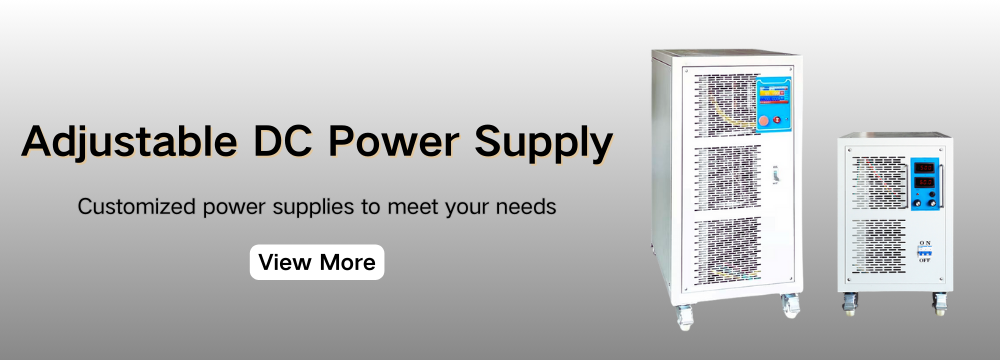
Within the whole treatment system, there is no component that exerts a more decisive influence on reaction efficiency, treatment effect, energy consumption, and service life than the power supply unit.Proven by abundant engineering practices is the fact that conventional DC power supplies, which only provide fixed voltage or fixed current, can hardly adapt to the intricate and volatile operating conditions of water treatment.Thus, indispensable as a core component in electrolytic water treatment systems has the adjustable DC power supply gradually become.
I. Electrochemical Reactions Require Precise Control of Current Density
Fundamentally a current-governed electrochemical process is electrolytic water treatment, on which current density imposes a profound impact in terms of reaction rate, product generation, and degradation performance.Widely divergent are the optimal operating parameters, which vary drastically according to processing techniques, water quality features, and the electrode materials adopted.
For example, moderate current is demanded in electrocoagulation, which prevents floc particles from being broken; sufficiently high current is required for highly concentrated organic wastewater, which strengthens the degradation effect; and a strict voltage window must be maintained in electrolytic chlorination, which ensures efficiency while inhibiting adverse side reactions.
Limited in flexibility are fixed-parameter power supplies, which may lead to inadequate reaction intensity that results in substandard effluent quality, or conversely, produce excessive current that gives rise to energy waste and electrode ablation.Only an adjustable DC power supply, which can regulate its output flexibly based on specific treatment purposes, is capable of maintaining the reaction within its optimal interval at all times.
II. High Water Quality Variability Demands Stable Output via Constant Voltage and Constant Current Modes
In practical engineering applications, the conductivity, temperature, pH, and pollutant concentration of raw water are in constant flux, directly causing significant fluctuations in the electrolytic cell's impedance. Should a fixed-parameter power supply be adopted, in which the voltage is held constant, violent fluctuations in current will inevitably occur. Such instability gives rise to erratic reaction intensity and effluent quality that is far from consistent.Adjustable DC power supplies, by contrast, enable automatic switching between constant-voltage and constant-current modes. Capable of real-time dynamic regulation of their output to offset changes in impedance, these units sustain stable current density or cell voltage throughout operation.Such a performance ensures treatment outcomes that are both consistent and dependable, avoiding scenarios in which effluent quality violates regulatory standards due to fluctuations in the power supply.
III. Dynamic Adjustment of Operating Parameters Significantly Reduces Energy Consumption
Energy-intensive by nature is electrolytic water treatment; should the power supply parameters stray from their optimal range, the energy efficiency of the entire system will plummet dramatically.Were the voltage insufficient, the electrochemical reaction would stagnate completely. Were the voltage excessive, a considerable portion of electric power would be dissipated as heat, leading to temperature rise, weakened process efficiency, and higher operational costs.Based on real-time fluctuations in water quality, the adjustable DC power supply is able to identify the ideal operating point. It maintains voltage and current within the range of minimum energy consumption while satisfying treatment requirements, effectively lowering the power consumption per ton of processed water. For large-scale municipal and industrial park wastewater projects, the long-term energy-saving benefits are substantial.
IV. Protecting Electrodes and Extending the Lifespan of Core Consumables
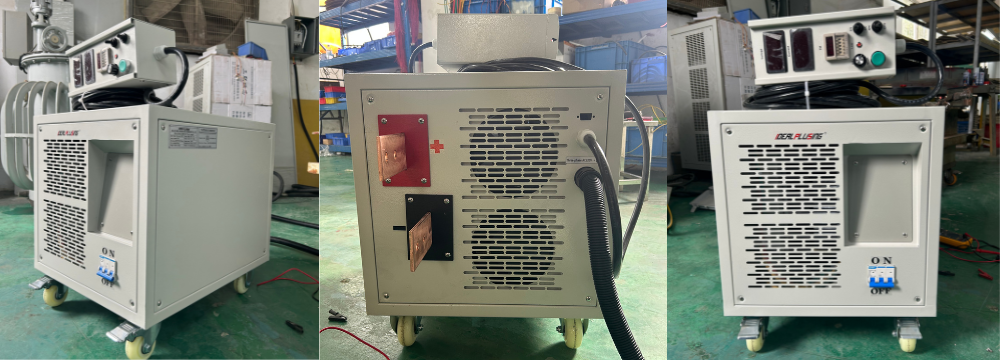
Electrodes are the core consumables within an electrolytic system; they are expensive and complex to replace. Current surges, excessive current, and frequent fluctuations can all accelerate electrode corrosion, passivation, and peeling, significantly shortening their service life. Adjustable DC power supplies feature "soft start" and "gradual voltage ramp-up" functions, which prevent the sudden current surges that typically occur the moment a system is powered on. Additionally, they support current and voltage limiting, ensuring that the electrodes consistently operate within safe parameters. Proper utilization of adjustable power supplies can extend electrode service life severalfold and drastically reduce maintenance expenditures.
V. Adapting to Complex Processes and Fulfilling Automation & Safety Demands
Commonplace in modern water treatment processes is segmented control: a preliminary phase where high current is employed to rapidly decompose pollutants; an intermediate phase where steady current is adopted for in-depth degradation; and a final phase where low current is utilized to stabilize effluent quality.
Supported by adjustable power supplies are multiple programmable curves, which enable automatic parameter switching and realize unattended automated operation. Meanwhile, integrated into the equipment are comprehensive protection mechanisms against overcurrent, overvoltage, short circuits, overheating, and reverse connection—mechanisms that can quickly isolate faults and ensure the safe, stable operation of the system in the humid, corrosive environments inherent to water treatment.
Electrolytic water treatment is not a process that can be accomplished merely by applying electricity; rather, it is an electrochemical process that demands precise control. The practical needs such as water quality fluctuations, varied processes, energy consumption control, and electrode protection determine that a fixed DC power supply cannot meet the requirements for stable operation. With its advantages of precise adjustability, stable output, comprehensive protection, and strong adaptability, the adjustable DC power supply serves as an indispensable core component for achieving efficient, economical, and reliable electrolytic water treatment. It not only guarantees that water treatment results consistently meet regulatory standards but also effectively reduces energy consumption and O&M costs.
Please do not hesitate to contact us.!