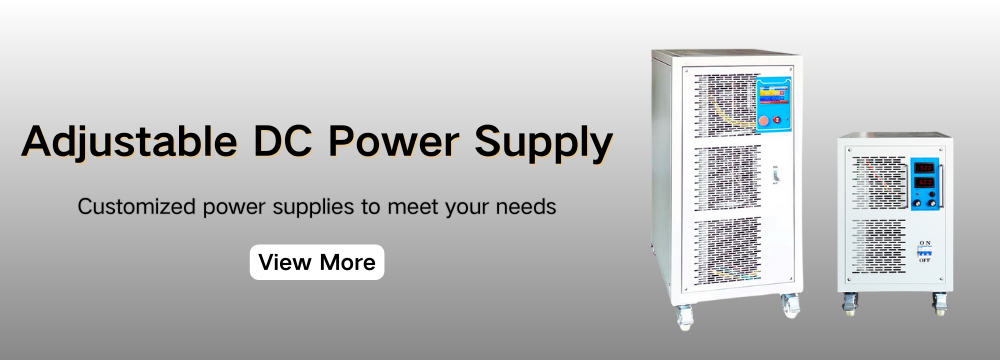
In electroplating production, the electroplating power supply is the core equipment ensuring coating quality and stable production efficiency. Many operators neglect the matching logic of current and voltage when configuring an electroplating power supply. Either the parameters are too small, causing loose coating and poor adhesion, or too large, leading to energy waste and equipment loss. Mastering scientific selection methods improves electroplating quality and reduces long-term operation costs.

Methods to Determine the Current Parameter of Electroplating Power Supply
The rated current of an electroplating power supply directly determines the deposition rate and uniformity of metal ions, making it the primary basis for selection. In actual configuration, calculate comprehensively according to the total plated area and required current density. The rated current should be slightly larger than the maximum process current to reserve a safety margin for mass production and working condition fluctuations, avoiding long-term full-load operation that affects the stability and service life of the electroplating power supply.
Different plating processes have distinct current density requirements. Conventional processes such as decorative nickel plating and acid copper plating have moderate current demands per unit area, while processes like chrome plating and hard anodizing require higher current output. When configuring an electroplating power supply, fine-tune based on recommended values combined with bath temperature, concentration and stirring conditions to ensure matching. Long-term low-load operation reduces efficiency and increases ripples, affecting brightness and density. Reasonable current matching balances quality and energy consumption.
Key Points for Selecting the Voltage Range of Electroplating Power Supply
The voltage of an electroplating power supply provides driving force for electrochemical reactions. The core of selection is to fit bath voltage and line voltage drop, not the higher the better. The bath voltage for conventional decorative electroplating is mostly 6–12V, slightly higher for alkaline zinc plating and oxidation, and can be extended to 15–24V for special processes. Reserve voltage drop caused by busbars, fixtures and contact resistance to ensure stable terminal load voltage within the process range.
The electroplating power supply should support continuous adjustable from 0V to adapt to different workpieces and processes. Excessively high voltage causes defects such as edge burning, pinholes and pits, while insufficient voltage slows deposition and weakens adhesion. A stable and reliable electroplating power supply maintains smooth current output in a wide voltage range, reducing waveform influence on coating structure, which is critical for precision electroplating scenarios.
Current-Voltage Matching and On-Site Adaptation
Selecting an electroplating power supply requires coordinated matching of current and voltage. Small-area precision parts focus on low ripple and high-precision regulation, while large-volume production emphasizes high-current stable output and efficient heat dissipation. Select standard rectifier electroplating power supplies for conventional DC electroplating and pulse types for precious metals and precision coatings to improve compactness and surface flatness.
Field wiring, fixture contact and bath conductivity also affect the actual working conditions. Excessively long cables or insufficient cross-section increase voltage drop, leading to low terminal voltage and insufficient current. Optimizing wiring, shortening distance and improving contact quality allow the electroplating power supply to work in a more efficient range, reducing heat, energy consumption and enhancing stability.
Summary and Suggestions for Electroplating Power Supply Selection
Reasonable selection of electroplating power supply is key to improving quality and controlling costs. First determine rated current based on area and current density, then voltage range combined with bath voltage and line loss, reserving margins for stability and economy. High-quality electroplating power supplies have complete protection functions, adapt to corrosive environments, and feature reliable long-term operation and easy maintenance.
In industrial electroplating, choosing an electroplating power supply with matching parameters and stable performance effectively reduces reject rate and energy consumption. The YIBENYUAN series of electroplating power supplies are optimized for various processes, providing stable current and voltage output to support stable production lines. Precise current-voltage selection with reliable electroplating power supply achieves high-quality electroplating output at lower cost and improves overall production efficiency.