Principles, Classification, Equipment and Industrial Prospects of Electrochemical Water Treatment Technology
Occupying a pivotal position in modern environmental governance is water treatment engineering. Boasting low chemical consumption, powerful oxidation capacity, simple operational logic, and excellent compatibility with automated and resource-recycling systems, electrochemical water treatment technology has emerged as a dominant technical route for tackling refractory industrial wastewater, stabilizing circulating water quality, and upgrading conventional treatment standards. Undoubtedly promising is its application prospect within the future water treatment industry. This paper systematically elaborates the fundamental principles, technical classification, equipment composition, key operating parameters, practical application scenarios and unique strengths of electrochemical water treatment systems, aiming to provide rigorous technical references for industrial practitioners and researchers.
I. Core Mechanisms of Electrochemical Water Treatment
Built upon electrochemical redox reactions is the entire technical framework of electrochemical water treatment. Under the excitation of a direct current electric field, interactions between electrode surfaces and aquatic electrolytes enable the removal, transformation and resource recovery of contaminants through both direct and indirect reaction pathways. Realized simultaneously are auxiliary functions including water quality regulation, scale inhibition and efficient sterilization. Conducted in situ inside closed reactor units are all reaction processes, effectively eliminating the risk of secondary pollution.
1. Direct Electrochemical Action
Occurring directly on electrode surfaces are pollutant oxidation and reduction reactions. At the anode, organic contaminants are completely oxidized and decomposed into carbon dioxide and water; at the cathode, dissolved heavy metal ions are reduced into elemental metallic substances and subsequently precipitated from water, achieving direct pollutant separation and degradation.
2. Indirect Electrochemical Action
Generated in situ on electrode surfaces under electric field excitation are abundant high-oxidation active substances, including hydroxyl radicals, active chlorine, hydrogen peroxide and ozone, alongside flocculent metal ions such as iron and aluminum ions. These active intermediates react rapidly with suspended matter, organic pollutants, bacteria and algae in water, accomplishing efficient flocculation, flotation, oxidative degradation and sterilization. Serving as the dominant working mechanism in practical electrochemical treatment is this indirect reaction pathway.
II. Classification and Technical Characteristics of Mainstream Electrochemical Water Treatment Technologies
Classified by reaction mechanisms and functional orientations, mature and systematic electrochemical water treatment technologies have been formed. Distinct in working principles, process characteristics and application boundaries is each technical branch, providing reliable bases for targeted engineering selection and optimal process design.
(I) Electrocoagulation and Electroflotation (EC/EF)
1. Core Principles
Adopted as soluble anodes in electrocoagulation systems are iron or aluminum electrodes. Continuous anodic dissolution releases ferric, ferrous or aluminum ions, which further combine with hydroxide ions in water to form polymeric hydroxide colloids. Powerful adsorption, bridging and net-trapping effects enable these colloids to aggregate suspended particles, colloidal pollutants, oil droplets and heavy metal complexes into large compact flocs. Synchronously occurring at the cathode is hydrogen evolution, producing fine microbubbles.
In electroflotation processes, uniformly generated hydrogen and oxygen microbubbles firmly adhere to floc surfaces, lifting aggregated pollutants upward to the water surface and realizing efficient solid-liquid and liquid-liquid separation. Required in this process are no additional chemical flocculants or traditional dissolved air flotation equipment.
2. Key Process Parameters
Controlled within precise ranges are core operating indicators: current density of 5–50 mA/cm², electrode spacing of 10–50 mm, electrolysis duration of 10–60 min, cell voltage of 3–20 V, and high-purity iron or aluminum electrode materials.
3. Treatment Performance
Achieved in EC/EF systems are removal efficiencies above 90% for suspended solids, over 95% for oil pollutants, and more than 98% for typical heavy metals including chromium, lead and cadmium. Capable of reducing chemical oxygen demand by 20%–40% is this integrated process.
4. Application Scenarios
Widely applicable are EC/EF technologies for pretreatment of electroplating, metallurgical, food processing and printing-dyeing wastewater. They can replace primary sedimentation tanks in municipal sewage plants, serve as core treatment units for oily wastewater, and support emergency disposal of heavy metal-polluted water bodies.
(II) Electrocatalytic Oxidation (EO) Technology
1. Core Principle
Deployed as core reaction units are high-stability insoluble dimensionally stable anodes. Massive high-potential hydroxyl radicals with an oxidation potential of 2.80 V, together with other active oxidizing groups, are generated in situ under electric field driving force. Non-selective oxidation is triggered against refractory macromolecular organics such as phenols, aromatic hydrocarbons, heterocyclic substances and pesticide intermediates. Broken efficiently are molecular chains and benzene ring structures, while thorough mineralization converts complex organics into small molecular organic acids and ultimately carbon dioxide and water. Simultaneously oxidized and removed is aquatic ammonia nitrogen in the form of nitrogen gas.
2. Key Process Parameters
Maintained in engineering operations are current density of 10–100 mA/cm², reaction pH ranging from 3 to 9, electrolyte concentration of 0.05–0.5 mol/L, and reaction temperature of 20–40°C. Available mainstream anode materials include titanium-based ruthenium-iridium coatings, tin-antimony coatings, boron-doped diamond (BDD) and lead dioxide electrodes.
3. Treatment Performance
Realized are 60%–90% COD removal rates for refractory organic wastewater and over 99% ammonia nitrogen removal efficiency. Promoted significantly is wastewater biodegradability, with the B/C ratio successfully elevated from below 0.2 to above 0.3.
4. Application Scenarios
Highly suitable is electrocatalytic oxidation for advanced treatment of chemical, pharmaceutical, pesticide and coking wastewater, as well as high-salinity refractory sewage. It supports standard upgrading of industrial park wastewater to Class I-A and Surface Water Class IV criteria and enables harmless disposal of toxic and hazardous water pollutants.
(III) Electro-Fenton (EF) Technology
1. Core Principle
Perfectly integrated in electro-Fenton systems are electrochemical advantages and traditional Fenton reaction mechanisms. Hydrogen peroxide is continuously generated through cathode oxygen reduction, while ferrous ions supplied by anodic dissolution or external dosing initiate efficient Fenton chain reactions. Abundant hydroxyl radicals produced in the system rapidly degrade refractory organic pollutants. Achieved through cathode reduction is cyclic regeneration of ferric ions into ferrous ions, which greatly reduces iron sludge output compared with conventional Fenton processes. Classified into conventional dosing type, fluidized bed type and photo-assisted synergistic type are current mainstream electro-Fenton technologies.
2. Key Process Parameters
Optimized for efficient reaction are acidic pH conditions of 2–4, current density of 5–30 mA/cm², ferrous ion dosage of 0.1–1.0 mmol/L, and aeration flow rate of 0.5–2 L/min.
3. Treatment Performance
Attainable are 80%–95% COD removal rates for high-concentration refractory organics, while degradation efficiency for phenols, dyes and pesticide residues exceeds 99%. Higher overall mineralization efficiency is exhibited compared with traditional chemical Fenton methods.
4. Application Scenarios
Widely adopted is electro-Fenton technology for treatment of printing-dyeing, chemical and pharmaceutical high-concentration organic wastewater, aging landfill leachate disposal, and emergency purification of sudden industrial water pollution incidents.
(IV) Electrodialysis and Capacitive Deionization (ED/CDI)
1. Electrodialysis (ED)
Relying on the selective permeability of ion exchange membranes are electrodialysis systems. Driven by DC electric fields, anions and cations migrate directionally and pass through corresponding membrane groups, realizing effective separation and concentration of fresh water and brine. Core operating parameters include stack voltage of 5–50 V, current density of 10–80 mA/cm² and flow velocity of 5–20 cm/s. Primarily applied are ED units for desalination of high-salinity industrial wastewater, reclaimed water purification, seawater pretreatment and brine resource recovery.
2. Capacitive Deionization (CDI)
Adopting high-specific-surface carbon-based electrode materials is the CDI process. Under electric field induction, aquatic ions are adsorbed onto electrode electric double layers to achieve low-energy desalination. Realized through electric field reversal is electrode regeneration, enabling cyclic and sustainable operation. Controlled parameters include operating voltage of 0.8–1.8 V, adsorption time of 10–30 min and regeneration time of 5–15 min. Main application scenarios cover low-salinity reclaimed water treatment, circulating water preparation, drinking water defluoridation and electroplating rinsing water reuse.
(V) Electrochemical Sterilization and Scale Inhibition Technology
Generated on anode surfaces are active chlorine and hydroxyl radicals, which destruct bacterial cell membranes and nucleic acid structures to achieve thorough sterilization and algae removal. Changed by micro-electric field effects are microbial membrane potentials, effectively inhibiting microbial reproduction without inducing drug resistance. Elevated locally at cathode surfaces is water pH value, promoting the formation of loose carbonate and hydroxide precipitates that are easily washed away by water flow. Inhibited simultaneously is crystal scaling growth, realizing dual functions of scale prevention and scale removal.
Mainly applied is this technology in industrial circulating cooling water systems, central air-conditioning water circuits, municipal water supply pipelines and reverse osmosis pretreatment units, serving as a green alternative to traditional chemical dosing sterilization and antiscalant treatment.
III. Core Composition and Key Equipment of Electrochemical Water Treatment Systems
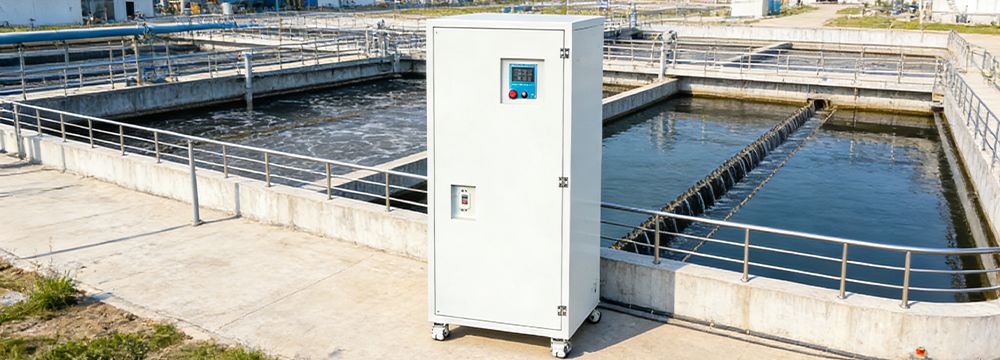
Supported by integrated and modular equipment systems is the engineering implementation of electrochemical water treatment. Directly determining treatment efficiency, operational stability and long-term O&M costs are equipment design logic and material selection schemes. Composed of three core subsystems are complete electrochemical units: electrolytic reactors, auxiliary functional systems and automatic control platforms.
(I) Core Electrolytic Reactor
Including plate-and-frame, fluidized bed, rotating electrode and three-dimensional electrode structures are mainstream reactor types. Dominating industrial applications are plate-and-frame electrolytic cells, further divided into monopolar and bipolar configurations. Lower in energy consumption and more suitable for large-scale projects are bipolar plate-and-frame reactors.
Classified into soluble iron/aluminum electrodes for electrocoagulation and insoluble coated electrodes, BDD and lead dioxide electrodes for advanced oxidation are core electrode materials. Determining system oxidation efficiency and service life are electrode performance and durability. Constructed from corrosion-resistant PVC, PP or FRP materials are reactor shells, adapting to complex wastewater water quality conditions.
(II) Auxiliary System Configuration
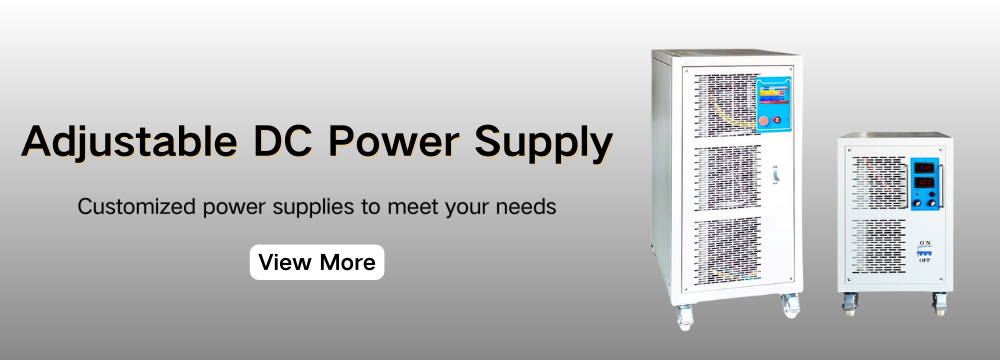
Equipped with high-frequency switching DC power supplies with adjustable voltage and current are modern electrochemical systems. Higher in efficiency, more compact in structure and superior in adjustability are high-frequency power units compared with traditional thyristor power supplies, supporting wide-range parameter regulation.
Uniform water distribution structures ensure full and stable water flow inside reactors without dead zones. Matching aeration and mixing systems strengthen mass transfer efficiency and provide oxygen sources for electro-Fenton and electrocatalytic oxidation reactions. Equipped additionally are solid-liquid separation units including sedimentation tanks and air flotation devices for pollutant separation, as well as online acid cleaning systems to eliminate electrode passivation and restore reaction activity.
(III) Intelligent Automatic Control System
Realized through intelligent control platforms are real-time monitoring of pH, ORP, conductivity, COD, ammonia nitrogen, flow rate, current and voltage. Automatically adjusted according to dynamic water quality changes are operating current, voltage, inlet flow and aeration volume. Integrated functions include automatic acid cleaning circulation, multi-dimensional fault alarm, data recording and remote monitoring, fully meeting industrial intelligent operation standards.
IV. Technical Advantages and Industrial Development Trends
(I) Core Technical Superiorities
Extremely low in chemical dosage and free of secondary pollution risks are electrochemical processes. Reduced by 30%–80% is sludge production compared with traditional physicochemical methods. Supported effectively are resource recovery of heavy metals and salinity, fully conforming to green environmental protection and dual-carbon strategic requirements.
Rapid in reaction speed and outstanding in refractory pollutant removal capability are electrochemical technologies, enabling efficient emergency disposal and advanced water quality upgrading. Adopting highly integrated modular design, the equipment occupies only one-third to one-half the floor area of traditional processes, featuring convenient installation and flexible capacity expansion. Realized through automatic control is unattended operation, greatly cutting operational and maintenance costs.
Strong in impact resistance of water quality and water volume fluctuations is the technology, capable of stably treating high-salinity, strong acid, strong alkali and toxic hazardous wastewater with wide application adaptability.
(II) Future Industrial Trends
Continuous upgrading of high-activity, long-life and low-cost electrode materials will further improve current efficiency and reduce consumable replacement costs. Gradually becoming mainstream are composite process coupling modes integrating electrochemistry, biochemistry, membrane separation and advanced oxidation, supporting zero-liquid-discharge and full resource utilization.
Deep integration of IoT, big data and artificial intelligence will realize real-time water quality prediction, intelligent parameter optimization and equipment fault pre-diagnosis, significantly improving system intelligence level and operational stability. Increasingly prominent is the development orientation shifting from simple pollutant removal toward high-value resource recovery, effectively enhancing the economic benefits of wastewater treatment projects.
V. Conclusion
As a typical green and high-end water treatment technology, electrochemical water treatment systems are progressively replacing conventional physicochemical processes. Becoming core solutions for industrial wastewater treatment, water quality upgrading and resource recycling are electrochemical technologies and supporting equipment. With continuous breakthroughs in electrode materials, equipment structure optimization and intelligent control technology, electrochemical water treatment will occupy an increasingly important position in environmental governance, providing solid technical support for green industrial transformation and aquatic ecological restoration.