In metal surface treatment processes, the anodizing power supply plays a crucial role. It's not simply a power output device, but rather a system that uses precise energy control to drive a controlled reaction between the metal and the electrolyte, ultimately forming a dense oxide film. Below, we will break down the working principle of the anodizing power supply from three dimensions: its logic, operating stages, and practical applications.
The Working Logic of an Anodizing Power Supply
The essence of an anodizing power supply is a "regulator" of electrical energy conversion. Its core task is to convert everyday industrial frequency AC power into stable DC power that meets the requirements of the anodizing process. In the closed-loop system of the electrolytic cell, the positive terminal of the anodizing power supply is connected to the metal workpiece to be treated, and the negative terminal is connected to the corresponding cathode plate. When current passes through the electrolyte solution, the power supply precisely controls the current intensity and direction, promoting the oxidation reaction on the surface of the metal workpiece – metal atoms lose electrons to form ions, which combine with oxygen elements in the electrolyte, gradually forming a uniform oxide film. In this process, the energy conversion efficiency of the anodizing power supply directly determines the formation speed and basic quality of the oxide film.
Operating Stages of an Anodizing Power Supply
1. Dynamic Adaptation of Current and Voltage
The advantage of the anodizing power supply lies in its adjustability. According to different metal materials (such as aluminum, magnesium, titanium, etc.) and oxide film thickness requirements, the power supply can dynamically adjust the output current and voltage. For example, when processing thin-walled aluminum materials, the anodizing power supply outputs a stable current with low current density to avoid cracking caused by excessively thick oxide film; for high-strength alloy parts, the power supply appropriately increases the voltage to ensure the bonding force between the oxide film and the substrate.

2. Synergistic Effect of the Electrolyte System
The operation of the anodizing power supply is not isolated; it requires synergy with the electrolyte solution. The electrical energy output by the power supply activates the ions in the electrolyte, causing them to move directionally under the action of the electric field. The stability of the anodizing power supply prevents localized reactions from becoming too violent, preventing defects such as pinholes and color differences in the oxide film. This three-way cooperation of "electrical energy - electrolyte - metal" is the key to the success of the anodizing process.
Applications of Anodizing Power Supplies
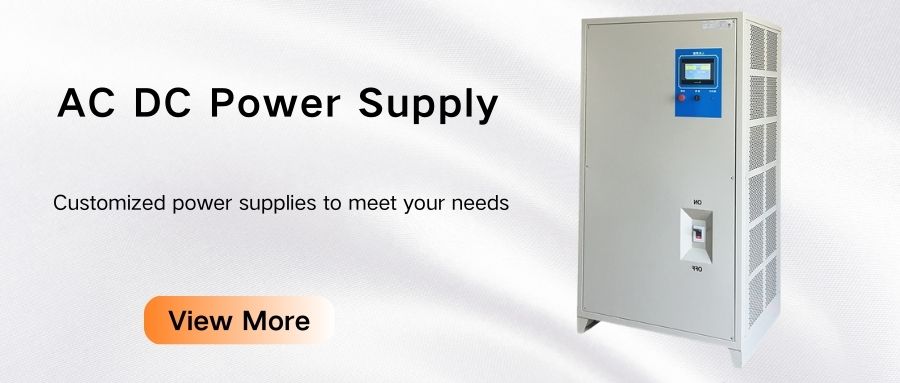
Anodizing power supplies are used in a wide range of applications, from protecting aluminum profiles in building facades to strengthening the surface of precision parts in the aerospace industry, and providing wear resistance to electronic equipment casings. Among many brands, YIBENYUAN's anodizing power supplies have become a practical choice for many industrial processes due to their strong adaptability and stable operation. By optimizing the output precision of the power supply, they can meet the efficiency requirements of mass production while also adapting to the process standards of small-batch customization, allowing the role of anodizing power supplies to be fully utilized in different scenarios.
Summary
The working principle of anodizing power supplies is essentially to transform the oxidation reaction on the metal surface from "naturally occurring" to "controllable and optimized" through precise electrical energy control. It is this refined management of energy that allows the anodizing process to maintain its lasting application value in industrial production.
YIBENYUAN Power Expert:
We customized input and output voltage and current, our offerings range from 0V to 2000KV DC and 0A to 20000A. We provide AC-DC solutions for the motor category or electrical appliances testing or Lab testing, electrochemistry, electrolysis, electroplating, and anodizing.
Thank you for considering our services.