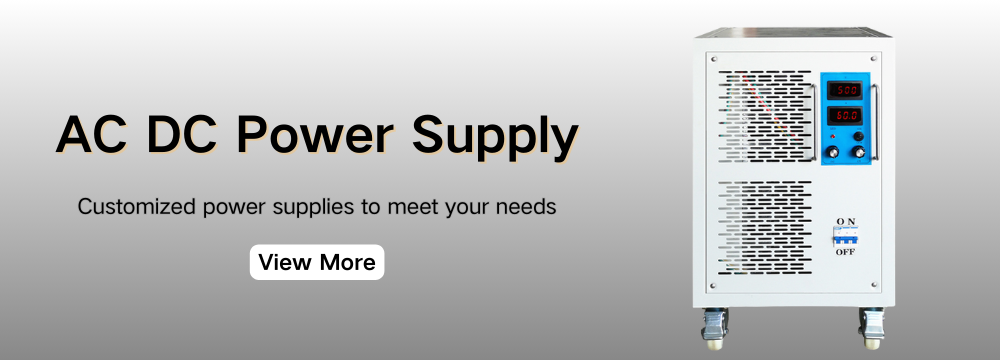
In the water treatment industry, power supplies serve as the "engine" for core processes such as electrochemical treatment and membrane separation, with their performance directly determining water purification effectiveness, equipment energy consumption, and operational costs. Unlike conventional fixed-output power supplies, adjustable designs have now become the mainstream and even essential choice for water treatment power supplies—this is precisely due to their precise adaptability to complex water treatment conditions, addressing numerous pain points that fixed power supplies struggle to overcome.
The diversity of water treatment conditions necessitates that power supplies possess flexible adaptability, which is the core value of adjustable design. Water quality is really different in situations. It can be wastewater, domestic sewage or ultrapure water production. The amount of stuff like COD, ammonia nitrogen and heavy metals is not the same everywhere. This means that the energy needed to treat the water is also different each time.
For example take electrocoagulation. When you use electrocoagulation to treat water that has a lot of dye in it like from a factory you need to use a current density. This helps to make the things that clean the water. Electrocoagulation is a way to clean water but it needs to be used differently depending on the water quality. The water quality of wastewater is different, from domestic sewage and this affects how electrocoagulation is used. But if you’re dealing with low-concentration domestic sewage, too much current will speed up electrode corrosion and make energy consumption skyrocket. That’s where adjustable power supplies come in—they let you adjust voltage and current continuously over a wide range. Operators can tweak the power supply to match the best possible settings based on real-time water quality data, so you won’t have to deal with incomplete treatment or wasted resources from a one-size-fits-all power supply.
Getting stable, efficient treatment results depends on the precise control that adjustable designs offer. Electrochemical reactions in water treatment need really stable power supply—if there’s any fluctuation, it can throw the whole reaction off balance. That might lead to problems like not removing enough pollutants or inconsistent water quality. Adjustable power supplies don’t just hold up against grid fluctuations and changes in load; they also keep output precision within ±1% thanks to high-precision adjustments, making sure electrochemical reactions run smoothly. What’s more, for special processes like EDI ultrapure water production, adjustable power supplies can switch easily between constant voltage and constant current modes, which fits the working needs of membrane components. This way, you get efficient ion removal, and you also avoid damaging the membranes because of abnormal voltage or current.
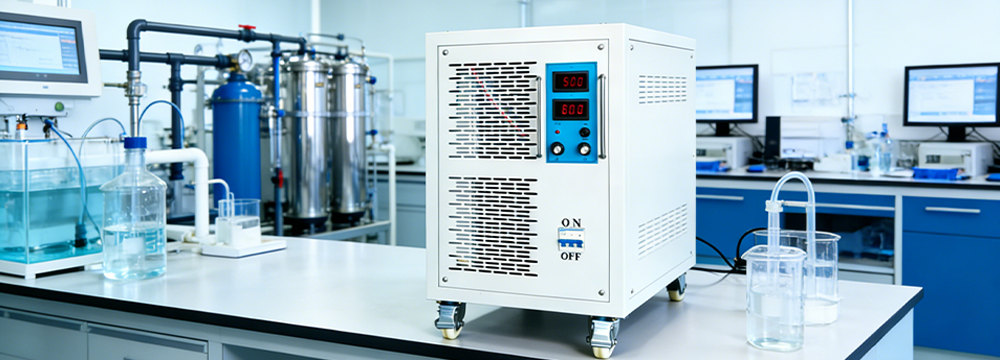
Energy conservation, consumption reduction, and cost control are the standout advantages of adjustable design. According to statistics, electricity consumption accounts for 30%-35% of a water treatment plant's operational costs, making power supply optimization a key factor in cost reduction. Fixed power sources maintain constant output regardless of operational conditions, leading to significant energy waste in low-load scenarios. In contrast, adjustable power sources dynamically adjust output power based on treatment load, aligning with process requirements and achieving 15%-30% energy savings compared to traditional fixed power sources. Additionally, adjustable design reduces issues such as electrode polarization and membrane damage, extending the lifespan of water treatment equipment and lowering maintenance and replacement costs, ultimately saving substantial expenses for enterprises in the long run.
To meet the demands of process upgrading and automation, adjustable designs are becoming more forward-looking. With the advancement of water treatment technologies, the widespread use of integrated treatment equipment and intelligent control systems has raised higher requirements for power supply compatibility and controllability. Modern adjustable power supplies are often equipped with digital control interfaces, enabling coordination with central control systems, remote parameter settings, and real-time monitoring. They work well for all kinds of processes, like electrolysis, electrocatalysis, and membrane separation. Not only do they meet the needs of current production, but they also fit in with future power supply changes that come with process upgrades—so you won’t have to waste money on extra power supply equipment.
To sum it up, adjustable design isn’t an unnecessary add-on—it’s the best choice that fits the complex working conditions of water treatment, while also balancing treatment effectiveness and cost. With its key benefits like flexible adaptation, precise control, and energy savings, it fixes all the big problems that come with fixed power supplies, and it’s a key part of keeping water treatment equipment running stably and efficiently. Picking an adjustable water treatment power supply basically means going for a more efficient, cost-effective, and forward-thinking power solution for your water treatment needs.