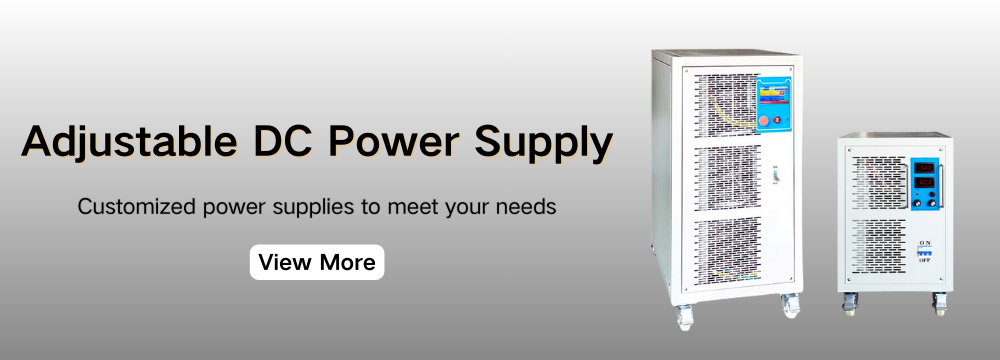
In processes such as electroplating, electrolysis, anodizing, electrodeposition, and electropolishing, adjustable DC power supplies are core equipment that determines plating quality, production efficiency, energy costs, and equipment stability. Many users focus only on power output when selecting or using power supplies, neglecting key parameters such as ripple, accuracy, response speed, and protection functions, ultimately leading to poor plating, excessive energy consumption, and frequent malfunctions. This article systematically outlines the key parameters of adjustable power supplies used in electroplating and electrolysis to help companies select the right type and ensure stable production.
I. Output Current and Voltage Range – Basic Compatibility Indicators
Output current and voltage are the most fundamental parameters of a power supply, directly determining whether it can meet process requirements.
Rated Current: Electroplating and electrolysis involve high-current applications. The current directly affects the deposition rate and plating uniformity. To get the results we need to calculate everything based on the workpiece area and the current density and the number of tanks with a little extra room for error around 10% to 20%.
Output Voltage Range: When we do electroplating we usually use low voltage like 12 volts or 15 volts.. For hard anodizing and electrolysis and oxidation we need higher voltage like 18 volts or 24 volts or even 30 volts. So it is better to have a power supply that we can adjust to voltages when we need to switch between different processes.
Adjustable Resolution: If we can adjust the current and voltage in steps it is better for precision electroplating. This way we can avoid making changes that might affect how stable the process is.
II. Output Accuracy and Stability – Determining Plating Quality
The stability of the output is very important for the quality of the plating. It affects how thick the plating is, how uniform it is, how shiny it is and how well it sticks. This is what we care about the most when we do high-end electroplating.
Constant Current/Constant Voltage Accuracy: A good power supply can be very accurate within one percent. The less it fluctuates the more uniform the metal ions will be deposited.
Load Stability: When the load changes the output should not. Go up suddenly. This way we can keep producing things
Grid Adaptability: when the voltage from the grid is not stable the output should stay stable. This way we can avoid problems with the power supply caused by big machines, in the workshop.
III. Ripple Coefficient – Affecting Coating Fineness
Ripple is the residual AC component in the DC power supply output, a parameter in electroplating power supplies that is easily overlooked but crucial.
An excessively high ripple coefficient can lead to problems such as pinholes, pitting, blackening, looseness, and poor adhesion in the coating.
Ordinary thyristor power supplies have high ripple and are unsuitable for precision electroplating; high-frequency switching power supplies can have a ripple coefficient as low as below 1%, resulting in a denser and brighter coating.
For precious metal electroplating, precision electronic electroplating, and decorative electroplating, low-ripple power supplies must be prioritized.
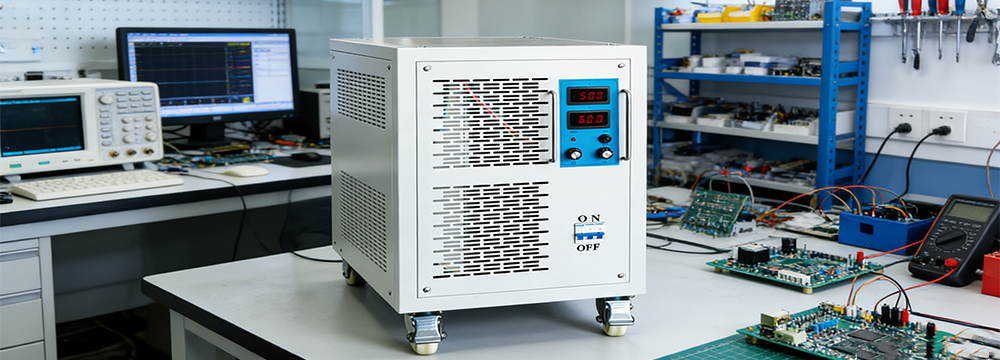
IV. Conversion Efficiency and Power Factor – Directly Affecting Electricity Costs
Electroplating and electrolysis are mostly continuous 24-hour production processes, and power supply efficiency directly determines long-term operating costs.
High-frequency switching power supplies can achieve efficiencies of 90%–95%, while traditional thyristor power supplies only reach 75%–85%, a significant difference.
Every 5% increase in efficiency can save thousands to tens of thousands of kilowatt-hours of electricity annually, significantly reducing electricity costs.
High power factor reduces reactive power loss, lowers grid pollution, and avoids transformer overheating and penalties.
V. Dynamic Response Speed – Adaptable to Complex Electroplating Processes
With the widespread adoption of new processes such as pulse electroplating, periodic commutation, segmented current, and stepped current, response speed has become crucial.
Fast response speed (millisecond level) allows for rapid adaptation to current and voltage changes without lag or overshoot.
Adaptable to complex processes such as pulse, commutation, timing, and cyclic processes, improving coating hardness, corrosion resistance, and density.
Slow-response power supplies can lead to process runaway and unstable coating performance.
VI. Protection Functions – Ensuring Equipment and Production Safety
Electroplating workshops are humid and highly corrosive environments. Insufficient protection functions can easily lead to machine burnout, workpiece damage, or production shutdowns. Key protections include:
Overcurrent, overload, overvoltage, and undervoltage protection
Overheat, short circuit, and back EMF protection
Phase loss, reverse phase, and input anomaly protection
Comprehensive protection can prevent electrode short circuits, workpiece burnout, and power supply damage, improving production line reliability.
VII. Heat Dissipation and Protection Rating – Adaptable to Harsh Operating Conditions
Electroplating environments involve acid mist, humidity, and dust, requiring power supplies with high protection capabilities.
Commonly used cooling methods include air cooling or water cooling. For high-power power supplies, water cooling is preferred due to its uniform heat dissipation, longer lifespan, and lower noise.
Anti-corrosion treatment of circuit boards, independent air ducts, and anti-corrosion coatings effectively extend the power supply's lifespan.
High-protection structures reduce failures caused by corrosion and dust accumulation, lowering maintenance frequency.
When selecting an adjustable power supply for electroplating and electrolysis, do not only consider power and price. Focus should be placed on key parameters such as current and voltage range, output accuracy, ripple coefficient, conversion efficiency, response speed, protection functions, and heat dissipation protection.
These parameters shape the power supply’s reliability and service life, while directly influencing plating quality, production efficiency, energy consumption, and maintenance effort.Mastering these key indicators helps you choose a stable, energy-saving, and long-lasting power supply that ensures reliable performance for electroplating and electrolysis.