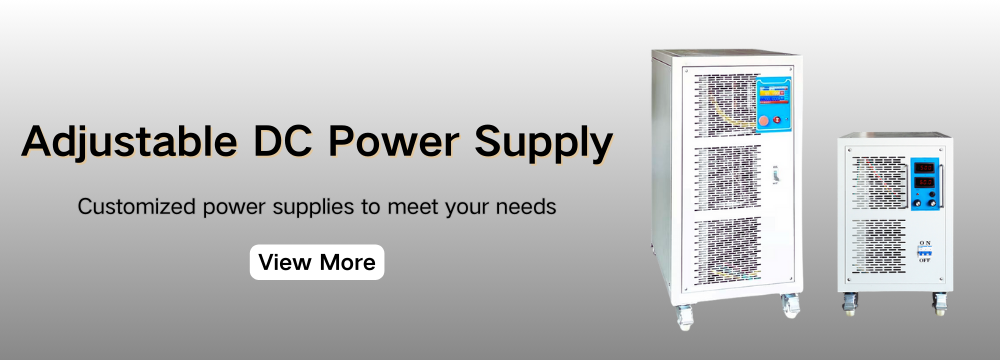
The core of selecting an adjustable power supply for water treatment is "adapting to the scenario and matching requirements." Laboratory R&D and engineering applications have vastly different needs and cannot be treated the same. Laboratories focus on process debugging and parameter verification, pursuing precise control and flexible switching at low power levels; engineering applications, on the other hand, are geared towards large-scale production, emphasizing high power, stable reliability under continuous operation, and energy saving. Many companies easily fall into the trap of using laboratory-grade power supplies to barely support engineering sites, leading to frequent equipment failures and unstable treatment results; or using high-power engineering-grade power supplies in the laboratory, causing unnecessary cost waste and negatively impacting R&D efficiency.
In fact, regardless of whether it's laboratory R&D or engineering applications, the core of selection revolves around "adapting to the process, stable operation, and fitting the scenario," but the emphasis differs at different stages. Below, we've outlined the core parameters that must be considered when selecting a power supply for both scenarios, helping you avoid selection pitfalls and choose a suitable and practical adjustable power supply.
First, clarify the core premise: the key differences between laboratory and engineering applications.
Laboratory R&D: Primarily involves small-batch, multi-condition testing, such as parameter tuning for electrolytic catalysis, membrane treatment, and disinfection processes. It prioritizes precision and flexibility, requiring high finesse in power supply adjustment and diverse waveforms, while having relatively lower power requirements.
Engineering applications: Primarily involve large-scale, continuous operation, such as large-scale wastewater electrolysis treatment, industrial wastewater oxidation, and pure water preparation. It prioritizes stability, energy efficiency, and durability, requiring higher power output, load adaptability, and protection capabilities from the power supply.
After clarifying the differences in application scenarios, focusing on core parameters is crucial for accurate power selection, avoiding overkill or insufficient power.
I. Output Adjustment Capability: Laboratory focuses on precision, engineering focuses on adaptability
Output adjustment capability is the core of adjustable power supplies, directly determining their adaptability to different water treatment processes. This is also one of the core differences between laboratory and engineering applications.
For laboratory research and development, the focus is on "adjustment precision" and "waveform diversity": high adjustment precision is crucial, allowing for precise matching of fine voltage and current adjustments to process parameters, preventing errors from affecting experimental results; simultaneously, it needs to support multiple output waveforms, such as pure DC and pulsed DC, adapting to different experimental scenarios like electrolysis and catalysis, flexibly switching operating conditions, and assisting researchers in optimizing process parameters.
For engineering applications, the focus is on "adjustment range" and "load adaptability": a wide adjustment range is necessary to adapt to fluctuations in water quality and quantity. For example, when water quality deteriorates, the output power can be flexibly increased to ensure stable treatment results; simultaneously, strong load adaptability is required to cope with dynamic load changes during water treatment, preventing power outages and output instability due to load fluctuations, ensuring continuous operation.
II. Stability and Reliability: Consistency in the Laboratory, Long-Term Effectiveness in Engineering
Whether in laboratory research or engineering applications, stability and reliability are the core baseline for adjustable power supplies for water treatment, but the emphasis will differ depending on the application scenario, directly impacting research results and engineering implementation effectiveness.
Stability is the bottom line for water treatment adjustable power supplies, with different focuses for laboratory R&D and engineering applications.
For laboratory R&D, stability lies in "output consistency". Repeated experiments to verify process parameters require the power supply’s output voltage and current to stay stable without significant fluctuations—otherwise, experimental data will be distorted, undermining research conclusions. Thus, lab power supplies need a clean output waveform with minimal noise to ensure consistent power conditions for each experiment.
For engineering applications, stability boils down to long‑term reliability.Since water treatment systems typically run around the clock, any power disruption can halt the entire process, which results in subpar water quality, production downtime, and higher operational costs.Only with premium internal components and strong anti-interference performance can engineering power supplies endure harsh workshop environments and maintain consistent performance under continuous operation.
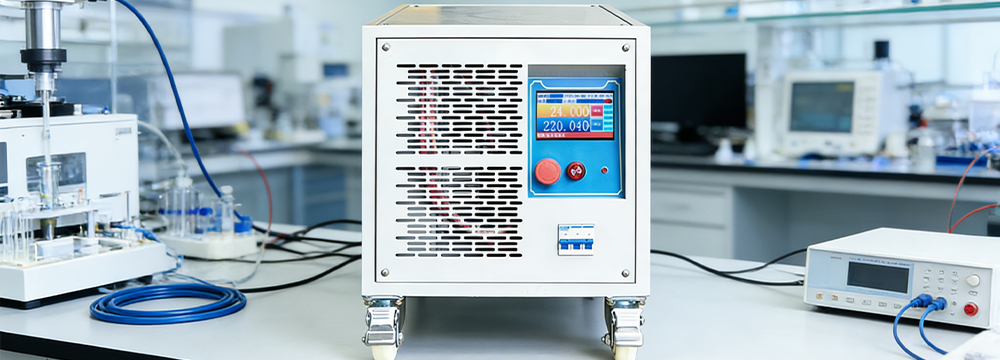
III. Protection Functions: Laboratory Focuses on Basics, Engineering Focuses on Comprehensiveness
In water treatment scenarios, power supplies inevitably encounter abnormal conditions such as overload, short circuit, and overheating. Comprehensive protection functions can prevent power supply damage, workpiece scrapping, and even eliminate safety hazards. Different scenarios require different protection functions.
In laboratory research and development, basic protection functions such as overcurrent, overvoltage, and overheat protection are sufficient. These functions can prevent power supply damage or experimental failure due to operational errors or improper parameter settings, ensuring experimental safety.
In engineering applications, protection functions must be comprehensive and reliable: In addition to basic overcurrent, overvoltage, and overheat protection, phase loss protection, backflow protection, and short circuit protection are also needed to cope with complex field conditions, so as to quickly cut off the power supply in the event of a fault, protect equipment and personnel, and minimize downtime losses.
IV.Environmental adaptability: Laboratories prioritize convenience, while engineering applications prioritize durability
Energy efficiency and adaptability are important. Not always the top choices when selecting a power supply. They directly affect how much you spend on operating costs and how easy it is to use, in engineering projects.
In laboratory research and development the power units are usually power and do not consume much energy.Energy efficiency is not the concern here. What matters most is that the power supply is highly precise and flexible to support testing conditions.
In engineering applications however high-power units run all the time.This makes energy efficiency very important.
In conclusion,power supplies that are highly efficient and adjustable reduce power loss a lot. Save a significant amount of money on electricity costs in the long run.They also support friendly water treatment practices.Adaptability is also crucial.For laboratory units it is ideal if they are compact, portable and easy to use.This allows for integration with small-scale testing setups.For engineering units they must be able to withstand, on-site environments.They should also support expansion and connect smoothly with automated control systems.This enables efficient operation without needing constant supervision.