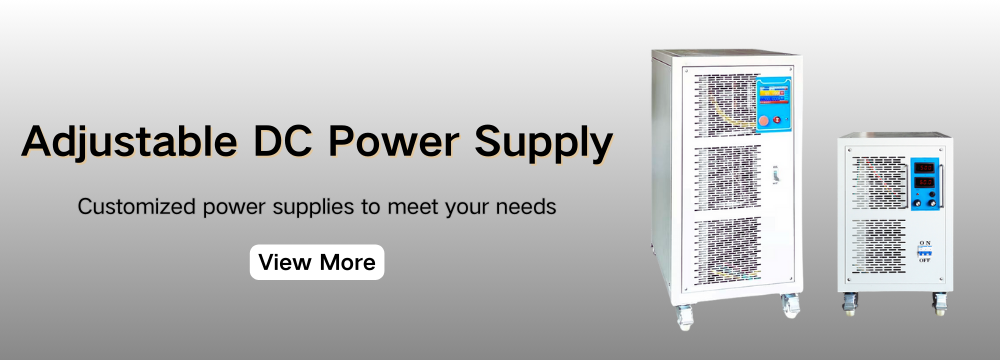
In the burn-in testing of electronic products, the choice between Constant Current (CC) and Constant Voltage (CV) modes on an adjustable power supply directly determines the effectiveness of the test. Load characteristics—such as impedance and energy requirements—serve as the primary basis for selecting the appropriate mode. Improper mode selection can lead to data distortion or even product damage. This article, drawing upon common load types, provides a detailed explanation of the selection logic and practical implementation points for both modes.
The key distinction between the two operating modes is their control target.Constant Current mode keeps the output current stable, allowing voltage to adjust automatically with load impedance.In contrast, Constant Voltage mode maintains a fixed output voltage, with current varying as load impedance changes.Both modes adopt closed-loop feedback control to suit the characteristics of different loads.
I. Applicable Scenarios and Load Matching for Constant Current Mode
Constant Current mode is best suited for scenarios involving loads with variable impedance or those requiring high current stability. It is primarily applicable to loads where "current determines the operating state," and is commonly encountered in three categories of burn-in testing:
LED-based loads — including individual LEDs and modules — are current-sensitive devices, with their brightness and service life directly dictated by the current passing through them. Only Constant Current (CC) mode can prevent light degradation or damage caused by current fluctuations, thus fulfilling the specific aging test requirements of these devices.
For battery-based loads — such as lithium-ion and Ni-Cd batteries — internal resistance fluctuates during charge-cycle burn-in. Constant Current mode maintains a steady charging current, ensuring efficient aging and safeguarding against damage from overcurrent.
Dynamic impedance resistive loads — like power resistors and heating elements — experience impedance shifts as their temperature increases. Constant Current mode ensures stable heating power, thereby guaranteeing consistent performance throughout the entire burn-in process.
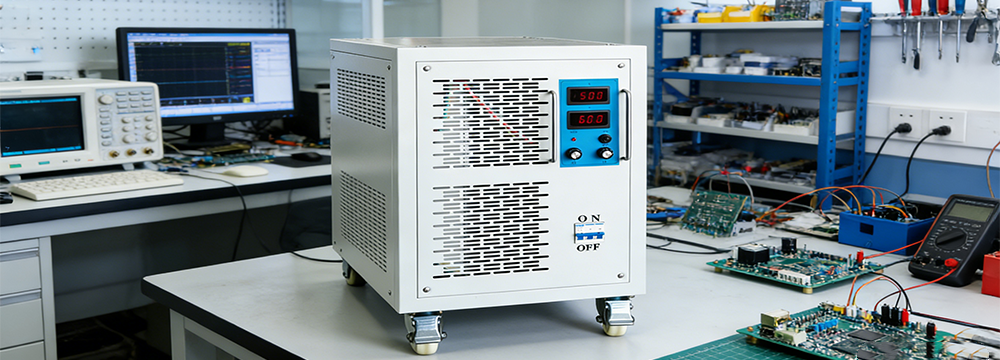
II. Applicable Scenarios and Load Matching for Constant Voltage Mode
Constant Voltage mode is best suited for scenarios involving loads with stable impedance or those requiring high voltage precision. It is primarily applicable to loads where "voltage determines the operating state," and is commonly encountered in three categories of burn-in testing:
Electronic module loads (power adapters, motherboards, etc.) are designed to operate at a fixed voltage. Constant Voltage mode effectively simulates the actual power supply environment, preventing module malfunctions that could otherwise be triggered by voltage fluctuations.
Static impedance purely resistive loads (fixed resistors, resistance boxes, etc.) possess stable impedance values. Under Constant Voltage mode, the output current remains stable in accordance with Ohm's Law, thereby simplifying parameter configuration and enhancing overall testing efficiency. For capacitive and inductive loads, impedance tends to stabilize after an initial aging phase. Consequently, operating in Constant Voltage (CV) mode ensures normal operation and facilitates performance testing—such as the measurement of leakage current and capacitance decay—over the long term.
III. Selection Principles and Practical Considerations
The fundamental principle guiding mode selection is to prioritize "load requirements." First and foremost, clarify whether the load prioritizes stable current or stable voltage, then select the appropriate mode based on expected impedance fluctuations. Equally important are three key considerations:
For loads with dual requirements — such as complex electronic equipment — opt for a programmable power supply with automatic CC/CV switching. Only in this way can both the authenticity and safety of the testing process be guaranteed.
Prior to testing, accurately measure the load’s rated parameters and its expected impedance variation range. This step is critical to avoid load damage caused by incorrect mode selection.
For dynamic loads — including motors and frequency converters — flexibly switch modes according to the specific operational phase, ensuring consistent test stability.
At its core, the choice between Constant Current (CC) and Constant Voltage (CV) modes hinges on achieving precise alignment between the power supply’s output characteristics and the load’s unique requirements. Scientific mode selection not only boosts the accuracy and reliability of aging tests, but also helps screen out products susceptible to early failure. It provides strong support for product quality control and mitigates potential safety risks during testing.
Please do not hesitate to contact us.!